
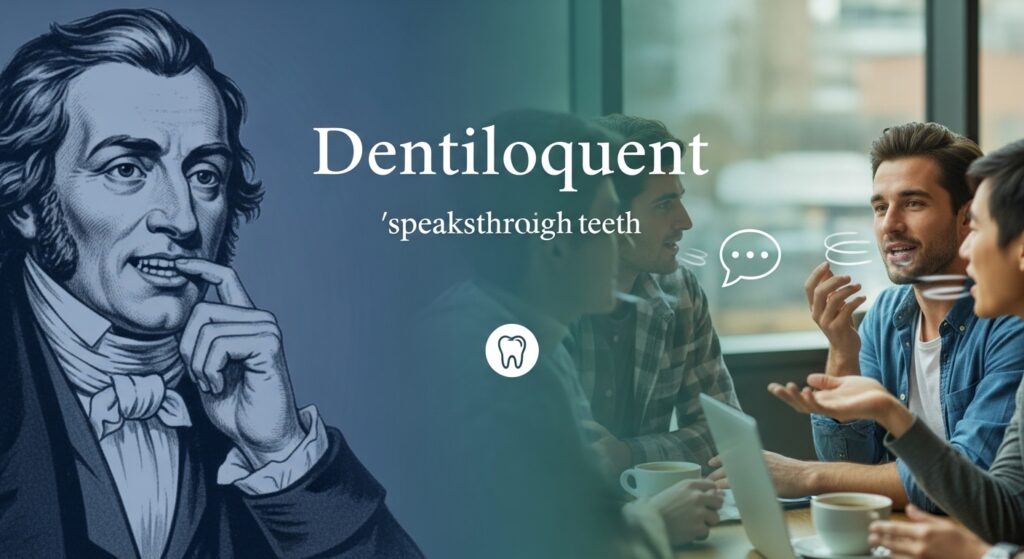
Language is filled with fascinating and sometimes obscure words that capture very specific behaviors or ways of speaking. One such intriguing term is dentiloquent. Though not commonly used in everyday conversation, dentiloquent carries a distinct meaning tied to speech, expression, and vocal articulation
What Does Dentiloquent Mean
The word dentiloquent is an adjective used to describe a style of speaking in which a person talks through clenched or partially closed teeth. This manner of speech often produces a restrained, tight, or sometimes tense vocal tone
Dentiloquent speech can occur in various situations, including:
-
When someone is angry but trying to remain controlled
-
When a person is speaking quietly or discreetly
-
When emotional tension affects natural speech patterns
The term highlights not just how words are spoken, but also the physical positioning of the mouth and teeth during speech
Etymology and Linguistic Roots
The word dentiloquent is derived from Latin components:
-
“Denti” meaning “teeth”
-
“Loquent” from loqui, meaning “to speak”
Together, the term literally translates to “speaking through the teeth”, which perfectly reflects its definition
This type of word formation is common in English, where Latin roots are combined to create descriptive and precise vocabulary
Characteristics of Dentiloquent Speech
Dentiloquent speech is identifiable by several distinct features
Restricted Mouth Movement
The speaker does not fully open their mouth, which results in a more constrained vocal delivery
Altered Sound Clarity
Because the teeth partially block the airflow, certain sounds may appear muffled or less clear
Emotional Undertone
Dentiloquent speech often conveys underlying emotions such as frustration, irritation, secrecy, or tension
Controlled Expression
In many cases, it reflects an attempt to maintain composure while still expressing thoughts or feelings
Situations Where Dentiloquent Speech Occurs
Although not a formal communication style, dentiloquent speech can appear in various real-life situations
1. Emotional Restraint
A person who is angry but trying to remain polite may speak through clenched teeth to avoid raising their voice
2. Confidential Conversations
When someone wants to speak discreetly without drawing attention, they may adopt a dentiloquent manner
3. Physical Conditions
In some cases, dental discomfort or jaw tension can naturally cause a person to speak with limited mouth movement
4. Dramatic Expression
Actors and performers sometimes use dentiloquent speech intentionally to convey intensity or suppressed emotion
Dentiloquent in Literature and Communication
While dentiloquent is not a commonly used everyday term, it can appear in literary and descriptive writing. Authors may use it to:
-
Add depth to character dialogue
-
Illustrate emotional tension
-
Create vivid imagery of how a character speaks
For example, describing a character as speaking dentiloquently immediately suggests controlled anger or secrecy, enriching the narrative
Psychological and Emotional Implications
Speech patterns often reflect internal emotional states, and dentiloquent speech is no exception
Suppressed Emotions
Speaking through clenched teeth can indicate that a person is holding back stronger feelings
Stress or Anxiety
Tension in the jaw and facial muscles may result from stress, influencing speech patterns
Desire for Control
Dentiloquent speech may signal an effort to remain composed in challenging situations
Understanding these implications can help in interpreting communication more accurately
Comparison with Other Speech Styles
Dentiloquent speech differs from other speaking styles in notable ways
-
Clear articulation: Involves open mouth movement and precise pronunciation
-
Murmuring: Low-volume speech that may not involve clenched teeth
-
Whispering: Soft speech produced without vocal cord vibration
Dentiloquent speech is unique because it combines restricted mouth movement with audible speech, creating a distinctive tone
Relevance in Modern Communication
Although the term dentilo quent is rarely used in casual conversation, the concept remains relevant
In everyday life, people frequently encounter situations where speech is influenced by emotions or physical tension. Recognizing dentilo quent speech can improve:
-
Communication awareness
-
Emotional intelligence
-
Interpretation of tone and intent
In professional settings, understanding subtle speech patterns can also enhance interpersonal interactions
How to Avoid Dentiloquent Speech
In situations where clear communication is important, it may be beneficial to avoid speaking dentiloquently
Relax Facial Muscles
Reducing tension in the jaw helps improve speech clarity
Practice Clear Articulation
Speaking with an open mouth ensures better pronunciation and understanding
Manage Emotions
Addressing underlying emotions can reduce the likelihood of constrained speech
Improve Communication Skills
Developing confidence in speaking can lead to more natural expression
Conclusion
Dentiloquent is a unique and descriptive term that captures a specific way of speaking—through clenched or partially closed teeth. While it may not be widely used in everyday language, it offers valuable insight into how physical and emotional factors influence communication
From its Latin origins to its application in literature and real-life scenarios, dentiloquent highlights the intricate relationship between speech, emotion, and expression. Understanding such nuanced terms enriches our vocabulary and deepens our awareness of human communication
In a world where effective communication is essential, recognizing and addressing speech patterns like dentiloquent can lead to clearer expression, better relationships, and a stronger understanding of others